Drinking well in Brittanysince 1995

The finest wine,
beer and
spirits.

Over 900 bottles, each one chosen by our sommeliers. In our cellars in Vitré, Fougères and Dinard, or at your door.

  • Free collection From any of our four Breton cellars
  • Shipping across France Reinforced packing, breakage covered
  • Secure payment Card and bank transfer
  • Advice from wine merchants A team that tastes what it sells
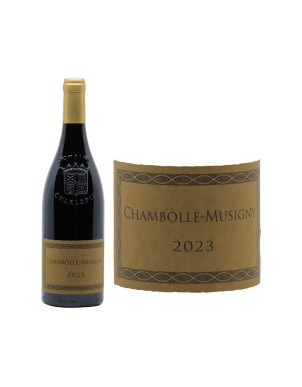
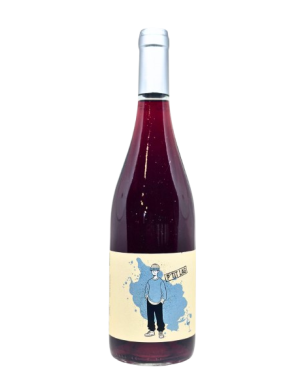
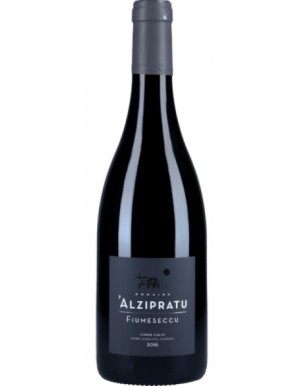
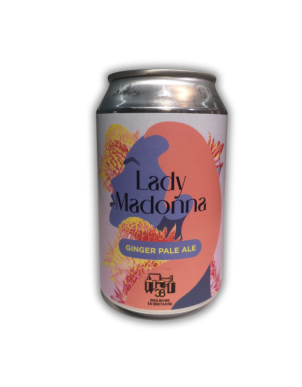
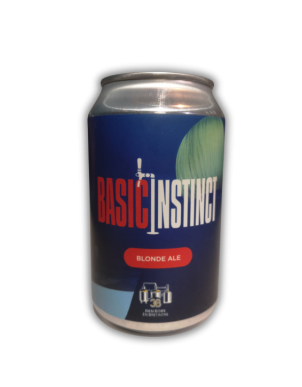
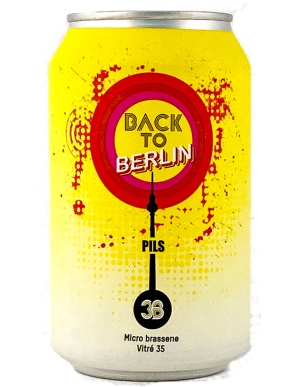
Our favourites Rarities worth finding See the rarities Our selection The cellarman's essentials See the selection The yearly event Wine fair See the selection Gift boxes A present that lands right See the gift boxes Our own brewery The 3B beers, brewed in Vitré See the beers

Our news

Custom Text Block
Lorem ipsum dolor sit amet conse ctetu

Sit amet conse ctetur adipisicing elit, sed do eiusmod tempor incididunt ut labore et dolore magna aliqua. Ut enim ad minim veniam, quis nostrud exercitation ullamco laboris nisi ut aliquip ex ea commodo consequat. Duis aute irure dolor in reprehenderit.

Livraison gratuite dès 250 € d'achat
La foire aux vins, du 11 septembre au 3 octobre
La cave Les 3B
La cave Les 3B, autre angle
4 caves en Bretagne Vitré · Fougères · Dinard
900+ références Wine, beer, spirits, cider
30 ans de métier A family house founded in 1995
4,8 sur 5 en avis Google Across all our cellars

Our production

The houses and breweries we carry, chosen for their work as much as for their bottles. Each one opens its bottles on sale here.

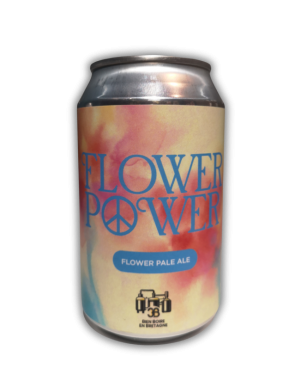
BRASSERIE LES 3B Douze bières brassées sur place, en cuves de petite taille, puis mises en canette directement à la brasserie. La gamme couvre les styles courants et change au fil des saisons.

Advice & pairings

Food & wine

Which bottle for a cheese with character?

A tannic red is the usual reflex, and the most debatable one. Tannins — that drying grip at the end of the mouth — run straight into the fat of the cheese: each hardens the other, and the pairing turns into a standoff.

Three routes that work better:

  • A sharp white with pressed cheeses. Comté, tomme, ossau-iraty: the acidity of a Loire chenin or a Jura savagnin cuts through the fat instead of fighting it.
  • A sweet wine with blues. Roquefort, fourme d'Ambert: salt asks for sugar. A Jurançon or a vin doux naturel settles the saline edge that a red only sharpens.
  • A dry cider with washed rinds. Camembert, livarot, maroilles. It is the regional pairing, and the safest: the bubble scours, the bitterness answers the strength. We always have some in the cellar.

The rule behind all three: with cheese, look for what cuts — acidity, bubble, sugar — rather than what weighs.

Guide

How to choose your wine online

In the shop, you describe the meal and the merchant suggests. Online, you have to work from what is written. Four markers are enough, in this order.

  1. Start from the meal, never from the appellation. « A red for a barbecue » leads to the right bottle far more reliably than « a Bordeaux » — the word covers thousands of wines whose only common ground is a map.
  2. Read the region before the vintage. The region tells you the style: a Loire white is nothing like a Rhône white. The year only really counts on wines built to age.
  3. Treat the price as an order of magnitude. Between €10 and €20, the ratio between what you pay and what you drink is at its best. Below that, you are mostly paying for the glass and the freight.
  4. Order few, and take notes. Three different bottles rather than six of the same: that is how you learn what you like, without being wrong by the case.

Still unsure? Call the cellar, or come and see us in Vitré, Fougères or Dinard. The advice is the same as at the counter.

News

Les 3B turn 30

The house began in Fougères in 1995, with a single cellar and a simple idea: that anyone should be able to buy a good bottle without having to pretend they know about wine.

Thirty years on, that means four addresses across Ille-et-Vilaine and the Emerald Coast — le Cellier Fougerais, le Cellier Vitréen, la Cave du 3B in Vitré and la Cave d'Émeraude in Dinard — alongside the wine bar Les 3 Comptoirs.

More than nine hundred bottles are chosen there, one at a time. None is listed because a distributor offered it: every one has been tasted, and argued for by someone in the house.

This site carries that work further. It is not meant to replace a visit to the cellar — rather to prepare one, or to bring it to your door.

Pairing

Which wine with a seafood platter?

A platter is not a dish: it is five or six textures and as many degrees of salinity. Looking for the one bottle that suits everything means looking for one that truly suits nothing.

Three wines, three reasons:

  • Muscadet Sèvre-et-Maine sur lie — the classic, and not out of habit. Its acidity cuts the richness of whelks; its faint closing bitterness answers the iodine. On Cancale oysters, fleshy and frankly salty, it holds without being flattened. Serve at 8-10 °C.
  • Chablis — chardonnay on limestone gives a mineral tension rarely found elsewhere. It excels with langoustines and prawns, whose sweet flesh calls for a fuller wine than muscadet. 10-12 °C.
  • Extra-brut champagne — bubbles clean the palate between textures. It is the only one of the three that crosses the whole platter. Choose a dosage under 6 g/l: above that, sugar fights the iodine.

Better avoided: an oaked white, whose vanilla masks the iodine; a Provence rosé, too discreet; and any red, whose tannins turn metallic against shellfish.

Serving

What temperature for each wine?

It is the adjustment that changes a bottle most, and the only one that costs nothing. Three degrees too warm brings the alcohol forward; three too cold closes the nose.

TypeTemperature
Champagne, crémant6 to 8 °C
Crisp dry white (muscadet, sancerre)8 to 10 °C
Full white (burgundy, chenin)11 to 13 °C
Rosé8 to 10 °C
Light red (gamay, pinot noir)13 to 15 °C
Structured red (bordeaux, syrah)16 to 18 °C
Sweet wine (sauternes, banyuls)8 to 10 °C

"Room temperature" is a modern misreading. The phrase dates from wood-heated houses, where a room sat at 16 °C. A modern living room is 21 °C. A bordeaux served at 21 °C tastes heavy and alcoholic; the same bottle at 17 °C tastes fresher and fruitier.

In practice: twenty minutes in the fridge for a summer red, fifteen minutes out of it for a white. An ice bucket drops a white by 6 °C in roughly ten minutes.

Storage

Keeping wine without a cellar

Most of the bottles we sell are drunk within the year. For those, having no cellar is no problem at all — on three conditions.

  • Stability matters more than coolness. A cupboard steady at 18 °C keeps wine better than a garage swinging between 5 and 25 °C. It is the swings that work the cork and let air in.
  • Lying down, if the cork is real. Dry cork shrinks within months. With a screw cap, position is irrelevant.
  • Away from light and vibration. Ultraviolet degrades wine — hence tinted glass. The top of the fridge fails on both counts: it warms and it vibrates.

Cellar-ageing guides for a flat: a crisp white or rosé, one to two years; an easy red, two to three; a structured bordeaux or rhône, five if the spot is steady. Beyond that, a temperature-controlled cabinet becomes necessary — around €300 for fifty bottles.

An opened bottle keeps three to four days in the fridge, corked, reds included. Cold slows oxidation; simply take it out ahead of time.

Basics

Organic, biodynamic, natural: what differs?

Three words used as synonyms, though only one matches a public certification. Here is what each actually commits to.

  • Organic (AB label, EU regulation). The only official one, audited by an approved body. It bans synthetic pesticides and fertilisers in the vineyard and caps added sulphites: 100 mg/l for a red, 150 for a white — against 150 and 200 conventionally. It says nothing about taste.
  • Biodynamic (Demeter, Biodyvin). Private certifications that take the organic rules and add plant preparations and a lunar calendar. Sulphites are lower still: 70 mg/l for a red under Demeter.
  • Natural wine. No legal definition until 2020, and since then an optional mention — vin méthode nature — requiring organic grapes, hand harvesting, no additives and a maximum of 30 mg/l of sulphites. Many wines called natural do not carry it.

What none of these guarantees: quality. A badly made organic wine is still badly made. We taste some every week, and we leave them out.

Of our 900 references, more than 360 are certified organic and around forty are biodynamic. Each product page shows its label.

Buying

What budget for a good bottle?

The question comes up daily at the counter. It deserves figures rather than "it depends".

PriceShare going to the wine
€5about €1
€8about €2.50
€15about €6
€30about €15

Fixed costs — bottle, cork, label, capsule — run to €1 to €1.50 whatever the range, on top of 20 % VAT and excise duty. On a €5 bottle, almost nothing is left for the grapes. That is arithmetic, not ideology.

The step that changes everything sits between €8 and €12. That is where a grower can lower yields, hand-pick the best parcels and wait for the right moment. The jump from €5 to €10 is larger than the jump from €20 to €40.
Above €30 you increasingly pay for scarcity, appellation reputation and ageing time. Real values, but they rise more slowly than the price.

Terroir

What to drink with Breton food?
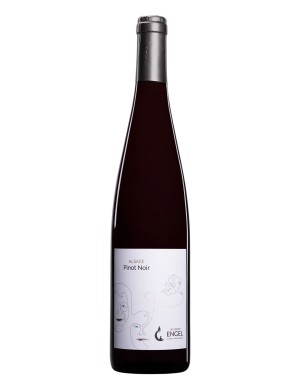
Brittany grows almost no wine, and drinks among the best in France. These are the pairings we are asked for most, in Vitré as in Fougères and Dinard.

  • Galette-saucisse — the local argument. Brut cider from Cornouaille remains the right answer: its acidity and bitterness meet the fat of the sausage where a heavily hopped beer fights it. A fresh Loire gamay at 13 °C also works.
  • Kig ha farz — a dense pot-au-feu with buckwheat pudding. It calls for a supple, thirst-quenching red: a young chinon or a beaujolais-villages. A tannic red gets lost in it.
  • Cancale oysters — muscadet sur lie, or a dry Loire chenin for the flat ones, which are more iodine-driven.
  • Guémené andouille — its smoky power calls for a crisp white rather than a red: a dry vouvray, or a farmhouse cider.
  • Kouign-amann — butter and caramelised sugar need a sweet wine that keeps its acidity. A coteaux-du-layon rather than a sauternes, or an iced sweet cider.
  • Far breton with prunes — a young maury or banyuls, whose dark-fruit notes extend the prune.

And the 3B beers? Our Vitré brewery makes twelve references. The blonde suits galette-saucisse as well as cider does; the brown holds up to andouille and slow-cooked meats.

Our cellars in Brittany

Nos rayons
Votre panier

Votre panier est vide.

Mes favoris

Connectez-vous pour voir vos favoris

Vos favoris sont enregistrés dans votre compte : vous les retrouvez d'un appareil à l'autre, et ils vous attendent à votre prochaine visite.

Mon compte

Mot de passe oublié ?

ou
Créer un compte